AI in Health
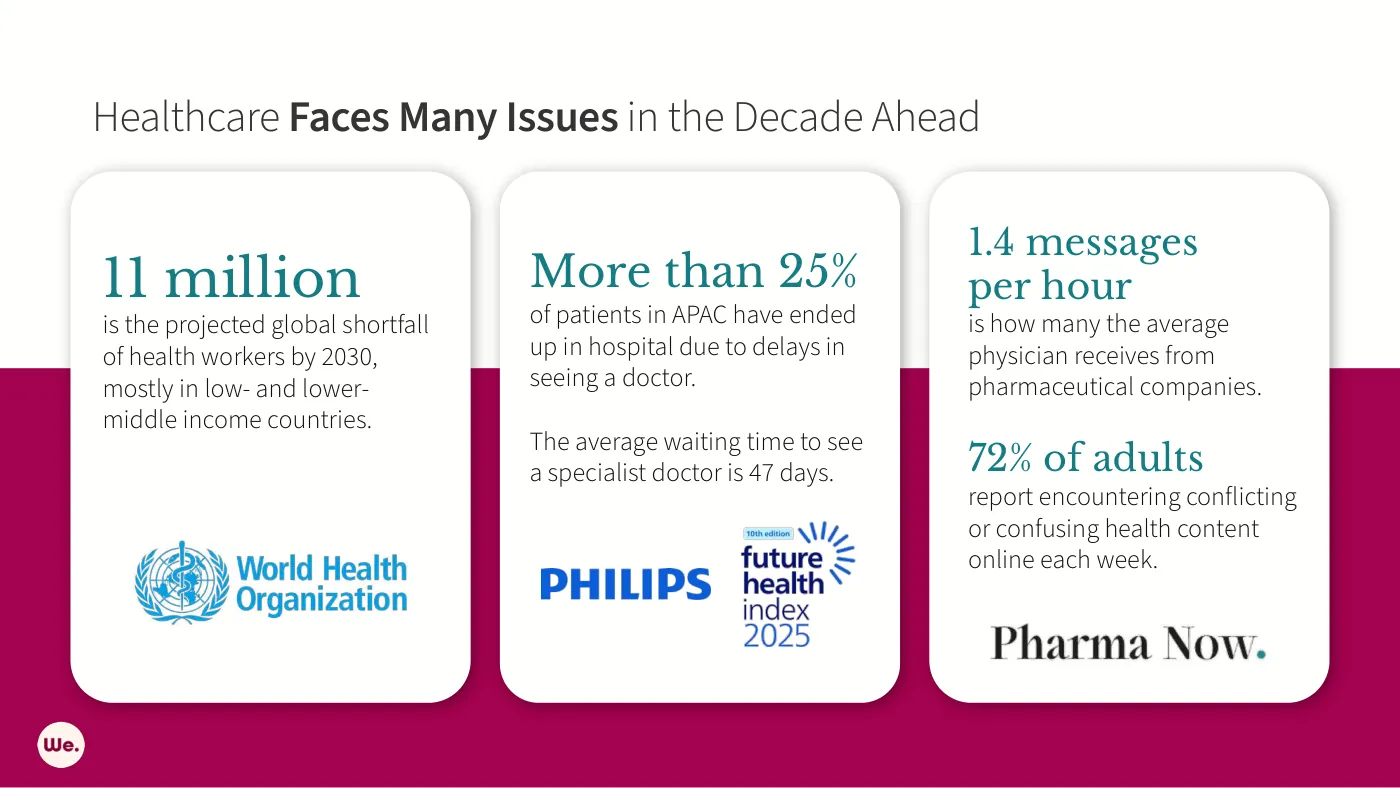
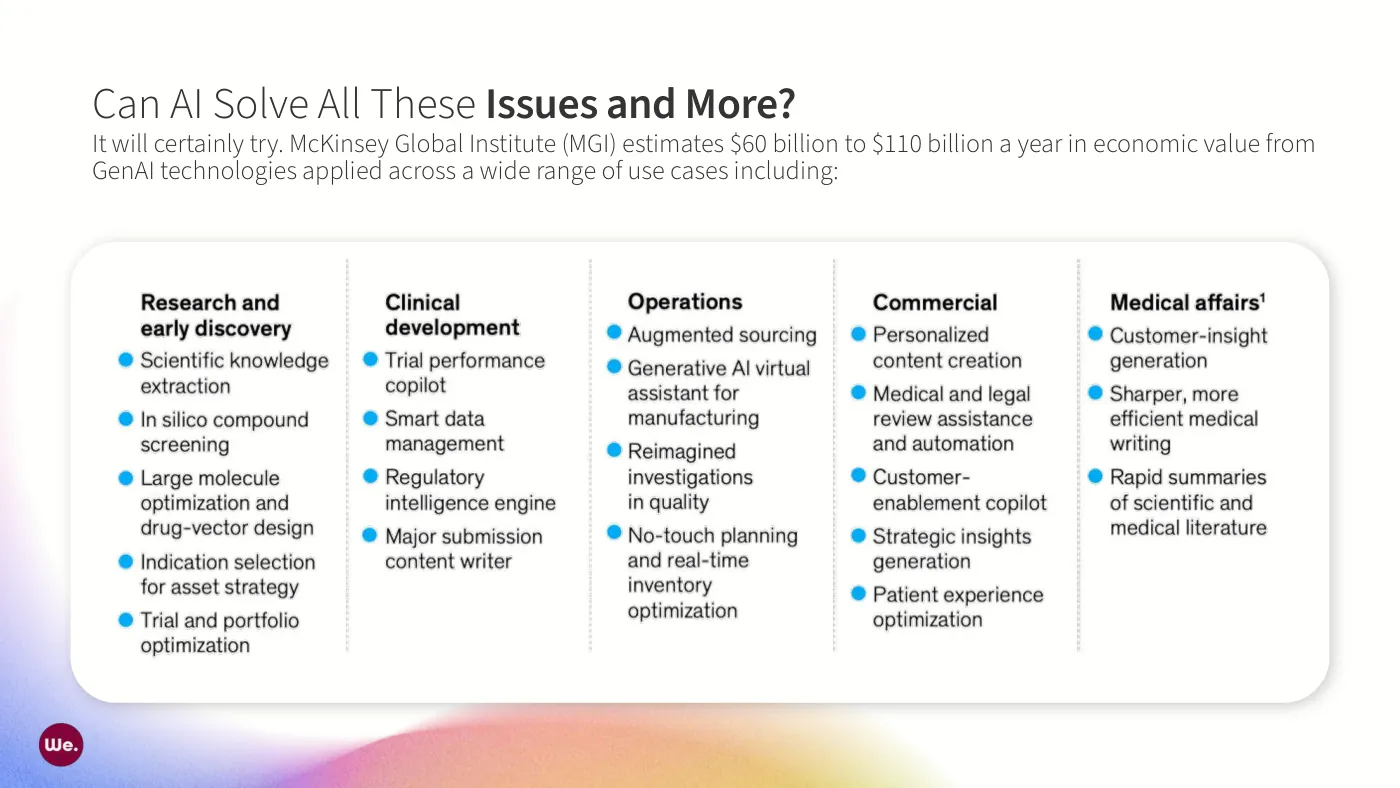
Healthcare faces an 11-million-worker global shortfall by 2030 and 47-day specialist wait times in APAC. AI will certainly try to solve it all — McKinsey estimates $60–110B a year in economic value from GenAI in health.
of global clinicians already use AI tools at work every day — double the 26% reported in 2024.
of health information queries now trigger AI overviews. "Dr. Google" has become "Dr. ChatGPT."
year-on-year increase in APAC healthtech fraud in Q1 2025 — health deepfakes rose 245% globally.
What this module covers
Every section in the 19-page module, in order.
- Healthcare Faces Many Issues in the Decade Ahead
- Can AI Solve All These Issues and More? It will certainly try. McKinsey Global Instit…
- Some Markets Are Building Robust Public-Private Health AI Ecosystems
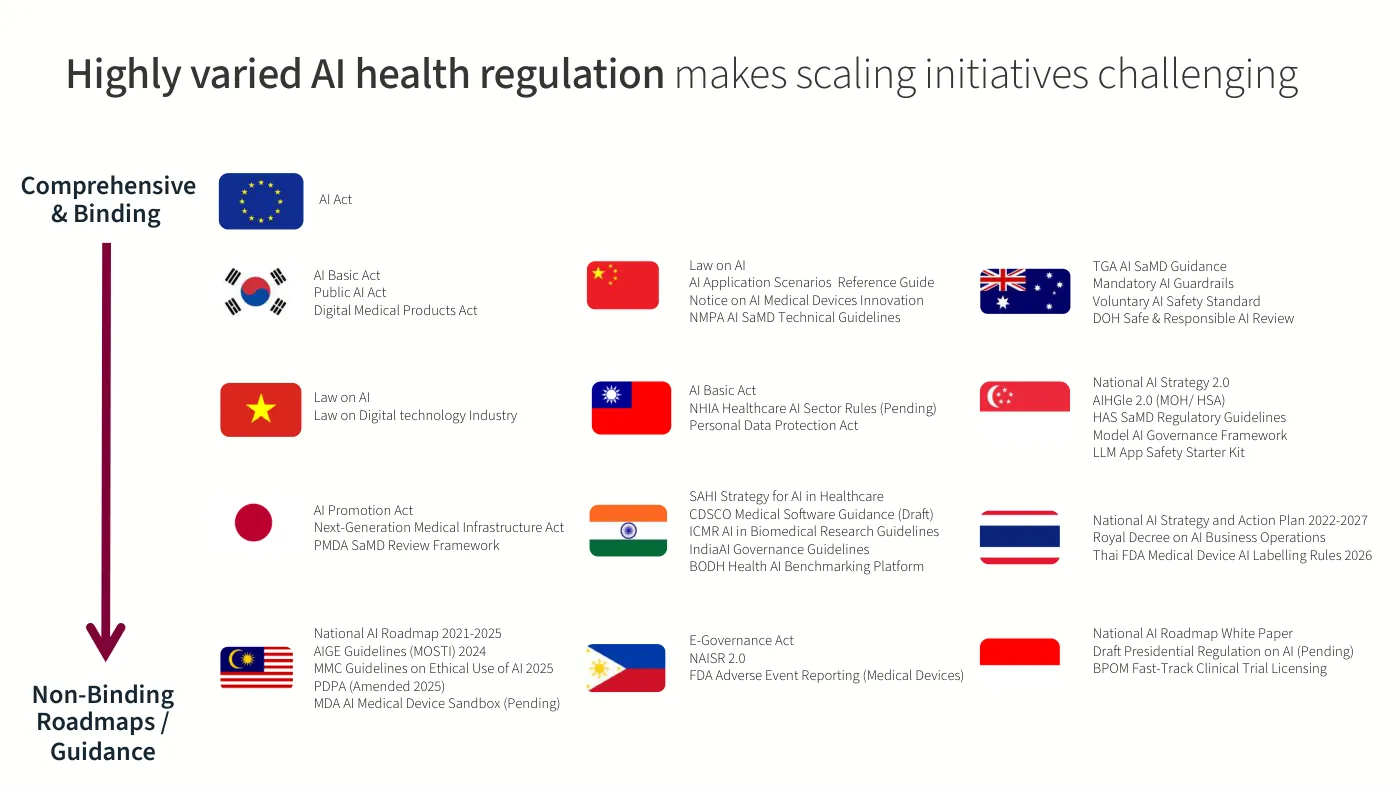
- Highly varied AI health regulation makes scaling initiatives challenging
- Yet AI Optimism Remains High for Both Clinicians and Patients
- Nearly Half of Global Clinicians Already Use AI Everyday
- Medically optimized image encoding
- Yet Training and Guidance Remain a Key Gap
- “Doctor Google” Has Evolved Into “Dr. ChatGPT”
- AI Already Serving Answers for Most Health Queries
- Most APAC Markets Now Have AI Doctor and Nurse Agents
- AI Health Influencers Growing Source of Trusted Information
- Healthcare deepfakes are growing threat In Q1 2025, healthtech fraud in APAC increase…
- Key Takeaways
Preview the first 6 slides
The opening 6 slides are shown in full. The remaining 13 are available free with a work email.

Optimism is high — training is not
APAC clinicians are the most positive about AI globally, and physicians are more optimistic than patients that AI improves outcomes. But 75% of medical students report little or no AI knowledge, only 30% say their institutions perform well on AI training, and 57% say guidance would increase their trust. We. has helped organisations like Medtronic embed AI into comms culture with needs assessments, six-course training and custom solution testing.
Patients have already moved
Top reasons for using LLMs in a health context: faster answers (43%), understanding medication side effects (35%), preparing questions for doctor visits (31%), reducing anxiety while awaiting diagnosis (31%). Most APAC markets now field AI doctor and nurse agents — clinicians report lower burnout, patients report higher satisfaction and empathy scores.
A fragmented regulatory map
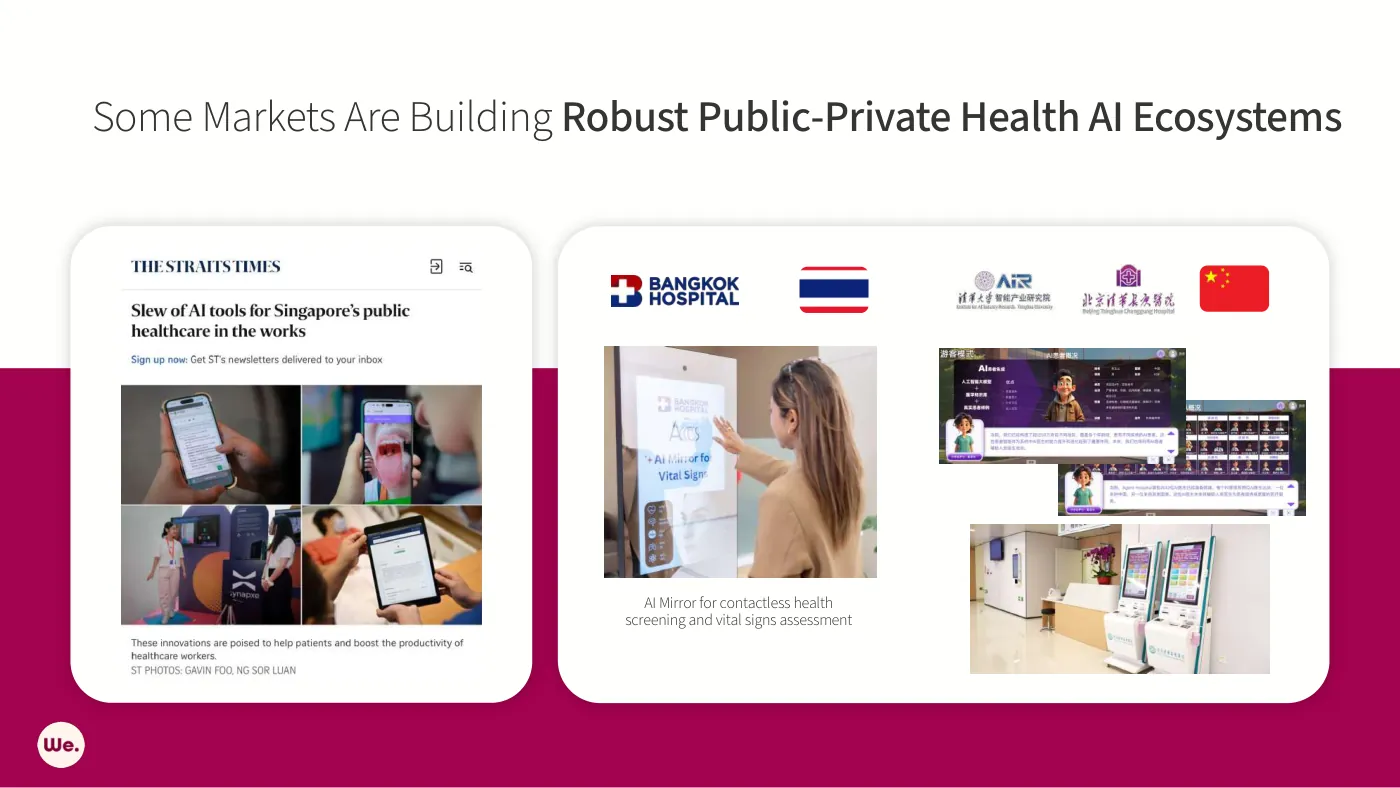
From the EU-style comprehensive AI Acts of South Korea and Japan's AI Promotion Act, to Singapore's Model AI Governance Framework and LLM App Safety Starter Kit, India's SAHI strategy, China's NMPA AI SaMD guidelines and Thailand's 2026 AI labelling rules — highly varied regulation makes scaling health AI initiatives genuinely challenging. Public-private ecosystems (like AI Mirror contactless screening) are racing ahead where policy allows.
Influencer avatars and the deepfake threat
AI health influencers like Indonesia's "Ibu Rini" are a growing source of trusted information, with AI avatars projected to grow 30% CAGR past a US$10B market. The dark side: deepfakes of trusted doctors — from Australia's Dr. Karl to India's Dr. Naresh Trehan — are fuelling a fraud surge (+1,500% in Singapore, +1,900% in Hong Kong SAR).
Key takeaways for health communicators
- Close the training gap — mass adoption without guidance is the sector's biggest risk and opportunity.
- Engage in policy conversations so regulation keeps pace with AI innovation.
- Meet HCPs and patients where they are — AI search, influencers and emerging channels.
- Own your share of the misinformation fight — deepfakes and health disinformation are everyone's responsibility.
Frequently asked
How many clinicians use AI in their daily work?
Nearly half of global clinicians already use AI every day, though training and guidance remain a key gap and most APAC markets now have AI doctor and nurse agents in some form.
What is the risk of health misinformation from AI?
Healthtech fraud in APAC increased 723% in Q1 2025, and healthcare deepfakes are a growing threat as AI health influencers become a more trusted source of information.
Is AI health regulation consistent across Asia Pacific?
No. Regulation is highly varied across APAC markets, which makes scaling health AI initiatives across the region challenging.